
I’ve got a stitch on my side
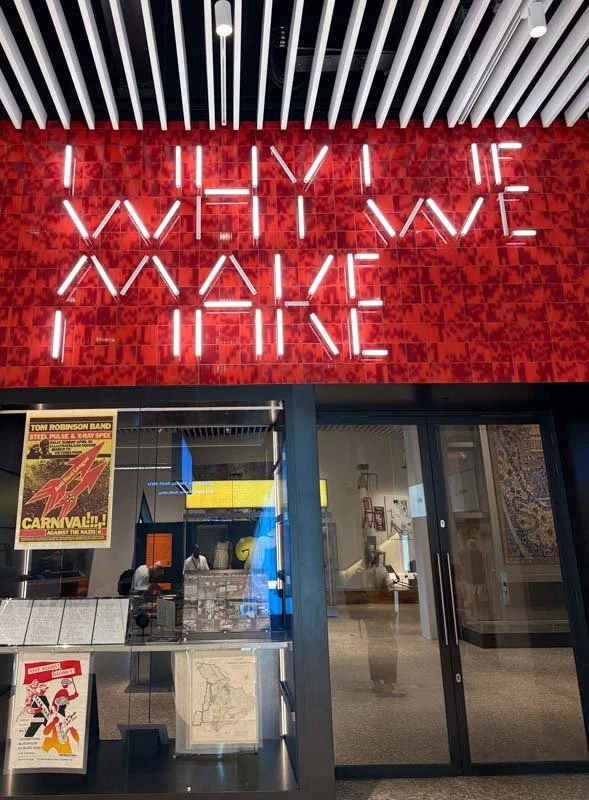
Why We Make, V&A East
At the new V&A East, in among the cases of costumes, jewellery and other crafts, I stopped at a sampler. 1830’s. Stitched by a servant of seventeen: Elizabeth Parker. It wasn’t the typical decorative type you would expect to see. It was her own words, cross-stitch into the cloth. Private thoughts, made permanent in thread.
I stood there longer than I meant to. There was pain in there, but she made it beautiful, in my view.
She had a needle and thread and a scrap of linen, and with this she found a way for her thoughts to exist in something palpable and real. It survived two hundred years. It's under glass now, in a museum, being read by strangers. She could not have known that. She only knew she needed to put something down.
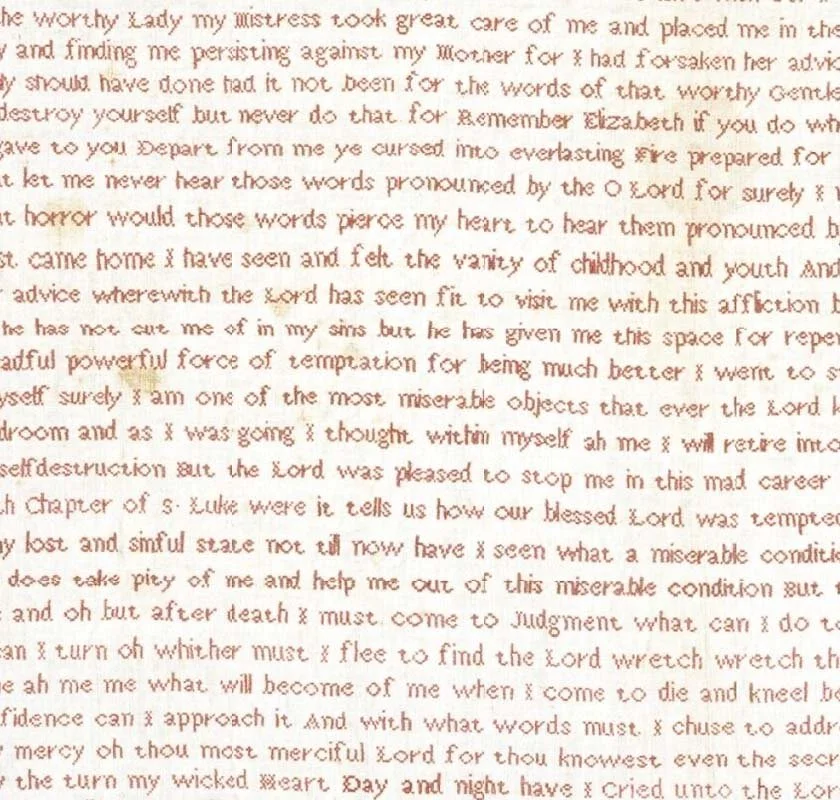
Sampler by Elizabeth Parker 1830’s on show at the V&A East
It reminded me of a piece of artwork I did years ago. A giant cushion, embroidered with the instructions from a paper sewing pattern. The kind you'd buy for a few pounds, fold out on the kitchen table, follow line by line to make a garment. I cross-stitched the instructions themselves into the fabric. Cut here. Fold here. Press seam open. A set of directions turned into the thing it was meant to produce. It was a way of naming a craft that mostly goes unnamed: sewing, embroidery, needlework, passed from generation to generation. Women's work, done in the margins of the day, rarely signed, rarely kept.
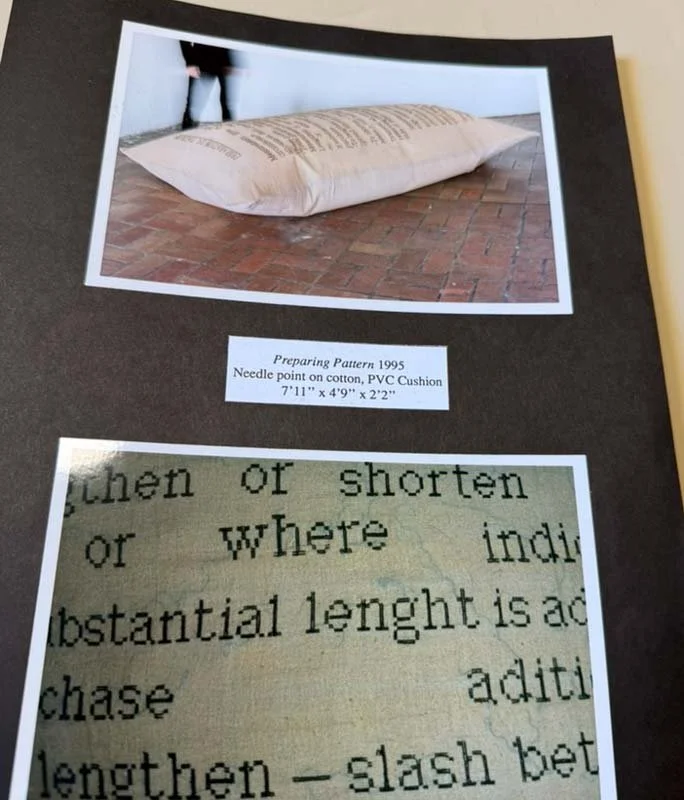
Preparing Pattern 1995, Ecole des Beaux Arts, Aix-En-Provence
The last two years have been the hardest of my life. My son, still a teenager, has been choosing a path that frightens me, one I know could cost him everything. There is no pattern for this, no instructions to follow line by line. Some days there is nothing to do with the fear.
What I've had, through all of it, is the work. Sitting at the bench, table or desk, piercing metal, setting a stone, writing a few words or stitching a piece of cloth. Slow and demanding just enough attention that the mind can't spiral while the hands are working. I have put my tears and fears into pieces in the hope that these emotions could bring someone solace, like the way I felt when I saw Elizabeth's sampler. I don't fully understand how that transformation happens. Only that it does, and that I've needed it to.
In my studio playing around
I also often think of Penelope, weaving by day, unpicking her work by night, holding off suitors and time itself, waiting for Odysseus. The loom as a way of surviving the waiting. Of making longing bearable by giving it a task, a rhythm, something for the hands while the heart does its slower, harder work.
It let her endure.
I don't think that's so far from what happens now. The tools change, but the need doesn't. We are still, so often, not heard, so we find ways to say what needs saying anyway, stitch by stitch, if that's what's put in our hands.
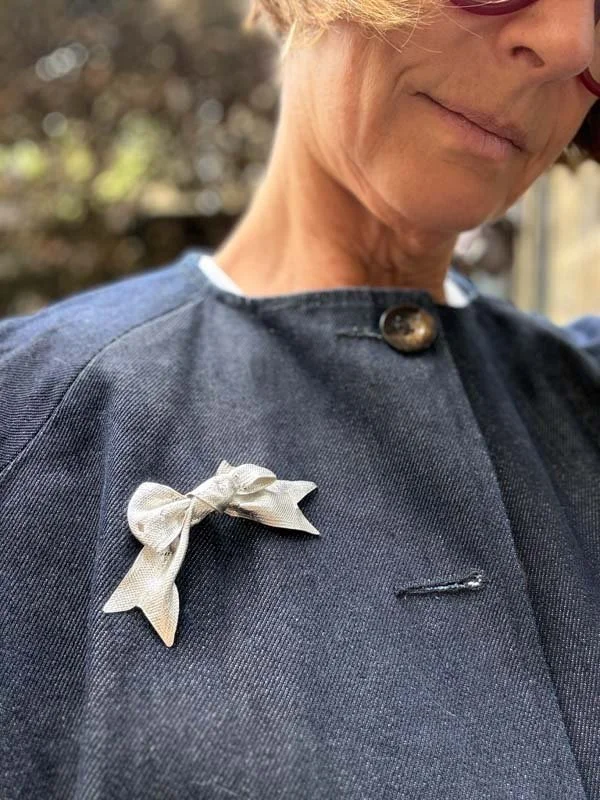
Recycled Sterling Silver Bow Brooch